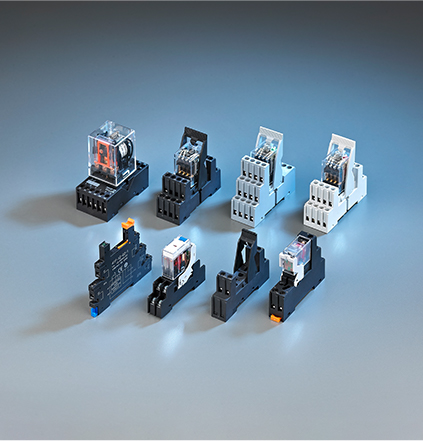
Relay Sockets for Safer, Smarter Wiring
LANZ Electronic offers a comprehensive range of relay sockets, including Japanese-standard types, European-standard types, direct plug-in designs, and PCB-mounted solutions. Advanced manufacturing technologies are applied to ensure higher safety standards and more efficient wiring in customer applications.
-
18F-2Z-A2
read 18F-2Z-A218F-2Z-A2 relay socket with 12A/300V rated load, -40~+85°C temp range, 2000V/S dielectric strength, 7g lightweight compact industrial component.
-
18F-4Z-C7
read 18F-4Z-C718F-4Z-C7 relay socket with 7A/300V rating, 2000V/S dielectric strength, -40~+65°C operating temp for industrial control systems.
-
10F-2Z-C1
read 10F-2Z-C110F-2Z-C1 relay socket features a rugged plastic construction with 8-pin configuration, rated for 10A/300V, designed for reliable relay mounting with excellent dielectric strength (2000V/S) and wide temperature adaptability (-40~+65℃).
-
10F-2Z-C2
read 10F-2Z-C210F-2Z-C2 relay socket is a high-performance 8-pin industrial socket with 10A/300V rated load, designed for reliable relay connections in harsh environments (-40~+65℃), featuring robust screw torque (1.0 Nm) and 2000V dielectric strength for industrial automation applications.
-
10F-3Z-C1
read 10F-3Z-C110F-3Z-C1 is a high-performance relay socket designed for industrial electrical applications, featuring robust construction, a wide operating temperature range of -40°C to +65°C, and reliable electrical performance with 300V voltage and 7A current ratings.
-
10F-3Z-C2
read 10F-3Z-C210F-3Z-C2 is a heavy-duty industrial relay socket with a 10A current rating at 300V, featuring a compact 34g design, wide -40°C to +65°C operating temperature range, and 2000V/S dielectric strength for reliable electrical control applications.
-
13F-2Z-A
read 13F-2Z-A13F-2Z-A is a compact, high-current industrial relay socket rated at 16A/300V, featuring 2000V/S dielectric strength and an extended operating temperature range of -40°C to +85°C. Weighing just 10g, it offers space-saving design with precise mounting dimensions for efficient integration into electrical control systems.
-
13F-2Z-A2
read 13F-2Z-A213F-2Z-A2 is an ultra-compact 8g industrial relay socket rated 16A/300V, with 2000V/S dielectric strength and a -40°C to +85°C operating temperature range for space-constrained electrical control systems.
-
13F-2Z-B
read 13F-2Z-B13F-2Z-B is a robust industrial relay socket rated 10A/300V, featuring 2000V/S dielectric strength, a -40°C to +85°C operating range, and a 34g design for reliable industrial control system integration.
-
13F-2Z-C1
read 13F-2Z-C113F-2Z-C1 is a high-current 16A/300V industrial relay socket with 2000V/S dielectric strength, -40°C to +65°C operation, and a 45g robust design for industrial control panels.
-
13F-2Z-C2
read 13F-2Z-C213F-2Z-C2 is a durable industrial relay socket rated 10A/300V, featuring 2000V/S dielectric strength, -40°C to +65°C temperature tolerance, and a 48g robust build for secure industrial control panel integration.
-
13F-2Z-C3
read 13F-2Z-C313F-2Z-C3 is a compact industrial relay socket rated 10A/300V, with 2000V/S dielectric strength, -40°C to +85°C operation, and a 43g design for industrial control system integration.
Relay Sockets for Flexible System Integration
What Is a Relay Socket
A relay socket, also known as a relay base, is designed to mount a relay securely and connect it to an electrical circuit. It provides power to the relay and offers stable terminal connections for control signals coming from switches, sensors, PLCs, or other control devices.
Using relay sockets helps keep wiring organized and simplifies both installation and maintenance. To meet different application needs, relay sockets are available in multiple mounting options, including DIN rail mounting, PCB soldering, and flange screw fixing.
LANZ Electronic is a trusted manufacturer and supplier of high quality relay bases in China. We provide cost effective solutions and support customized products to meet specific application requirements.
Types of Relay Sockets
Relay sockets must match the relay type, pin layout, and electrical requirements. Common relay categories include:
- General purpose relays: Widely used for switching electrical loads in control and automation circuits.
- Latching relays: Designed to maintain their switching state after the control signal is removed. The relay socket must match the specific pin configuration of the relay.
- Non latching relays: Return to their default state when power is removed and are the most common choice for industrial automation applications.
- Solid state relays: Require different socket or mounting solutions due to their electronic switching design. These are often installed using panel or DIN rail mounting and follow different wiring principles compared to electromechanical relays.


Why Relay Sockets Are Useful
Easy Replacement
Relay sockets allow relays to be replaced quickly without rewiring, making troubleshooting and servicing faster and more efficient.
Clean and Secure Wiring
Clearly defined terminals create cleaner panel layouts and provide more secure electrical connections compared to direct wiring.
Consistent System Design
Using standardized relay sockets helps maintain uniform panel designs, reduces installation errors, and supports long term system reliability.
Relay Socket FAQ
A relay socket is a base that holds a relay and provides terminals for wiring the coil and contact circuits.
They are used to mount relays securely and make replacement faster without rewiring, which simplifies maintenance and reduces downtime.
Choose a socket that matches the relay model and pin layout, meets the required voltage and current ratings, and fits your preferred mounting method.
Common options include DIN rail mounting, panel mounting, flange mounting, and PCB mounting.
Relay sockets are typically offered with screw terminals, spring clamp terminals, solder terminals, or quick connect terminals depending on the design.
Yes, but the socket must match the relay’s pin configuration and contact arrangement. Always confirm compatibility before selection.
Yes, relay sockets are widely used in control panels, industrial automation, HVAC, and equipment control applications.
Some relay sockets support accessories such as retaining clips, marking tags, LED indicators, and surge suppression modules, depending on the series.